Booking choice: The Seven Lakes day trip, from $63 per person. Check dates Tour details
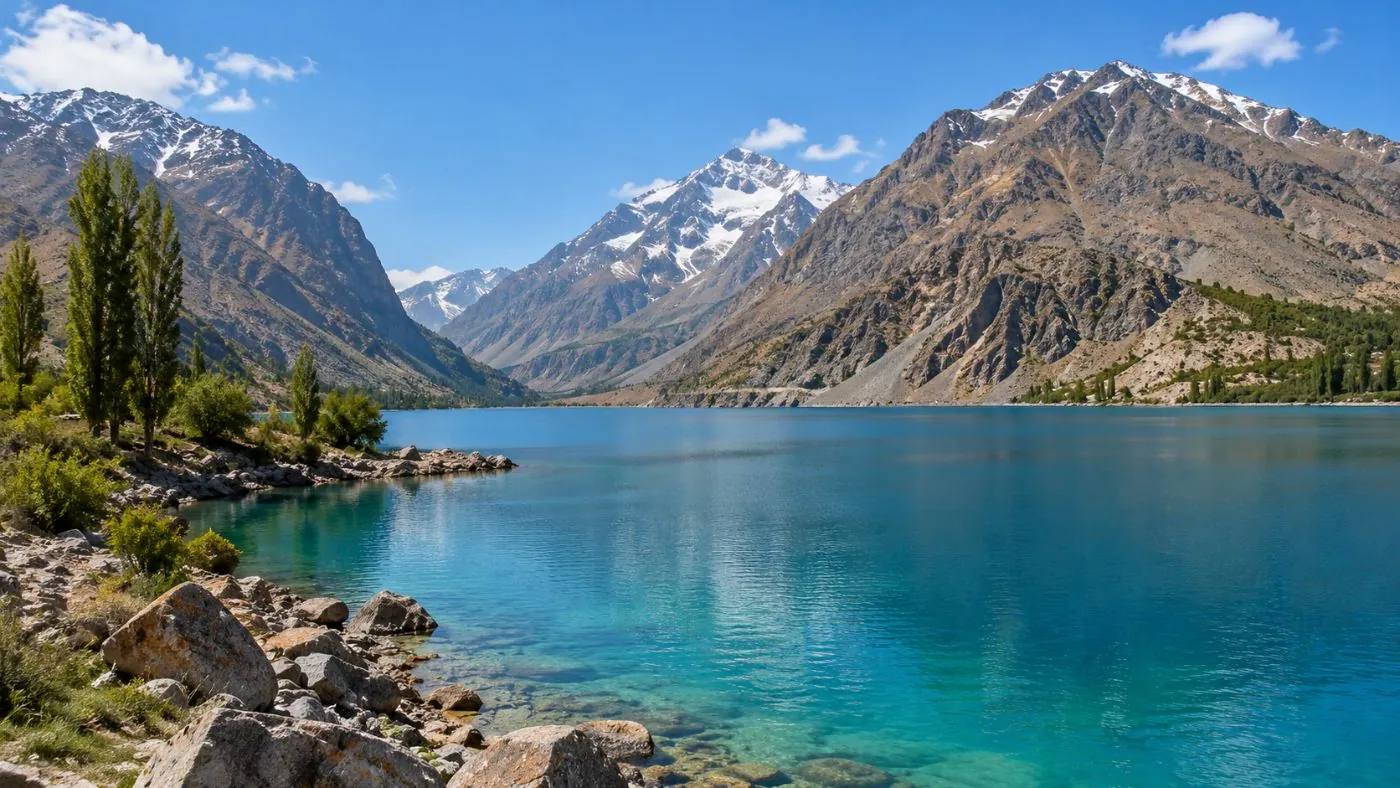
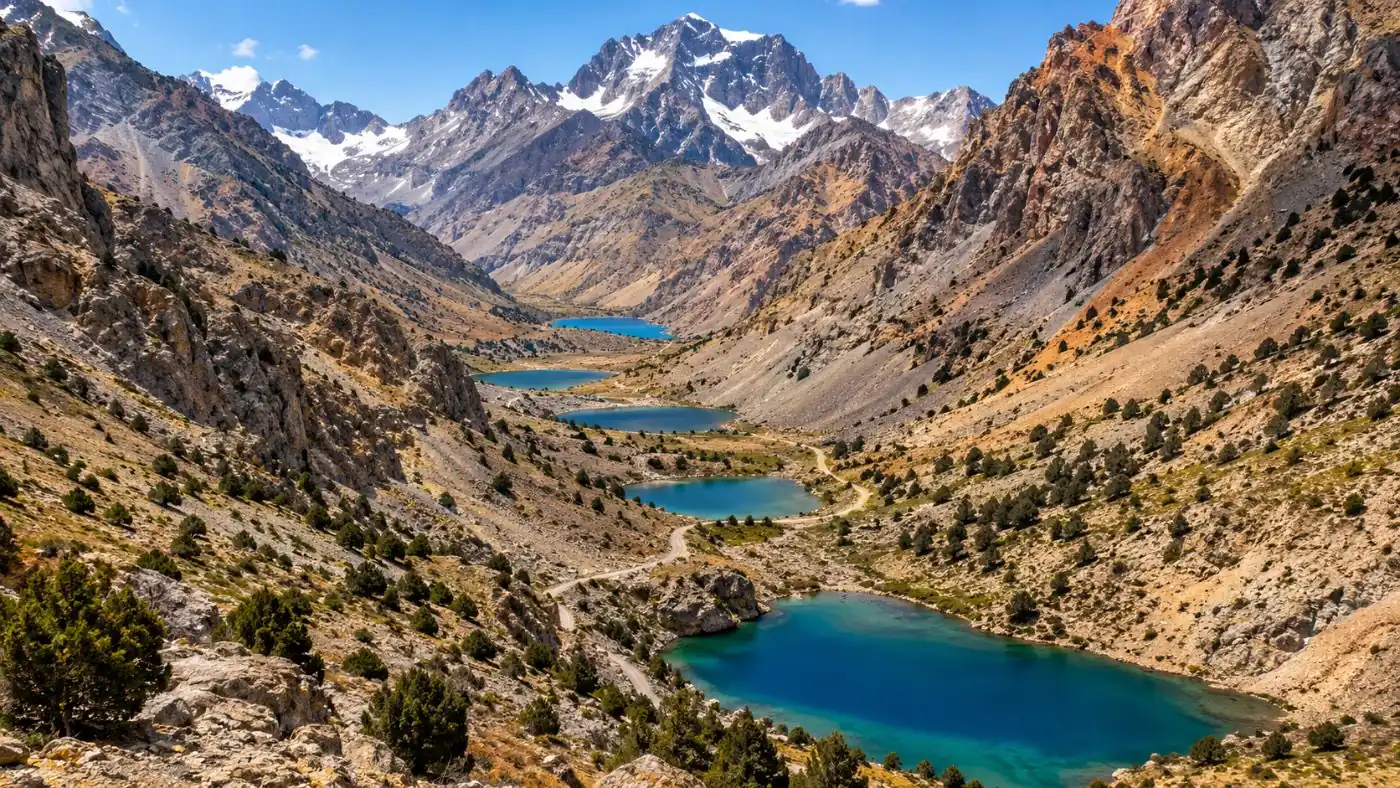
Haft Kul means seven lakes in Tajik, and that is all the name promises: seven lakes, strung out along the Shing river in the western Fann Mountains. They rise from Mijgon at 1,598 metres to Hazorchashma at 2,400. Locals also call them the Marguzor lakes, after the largest, or the seven beauties of Shing.
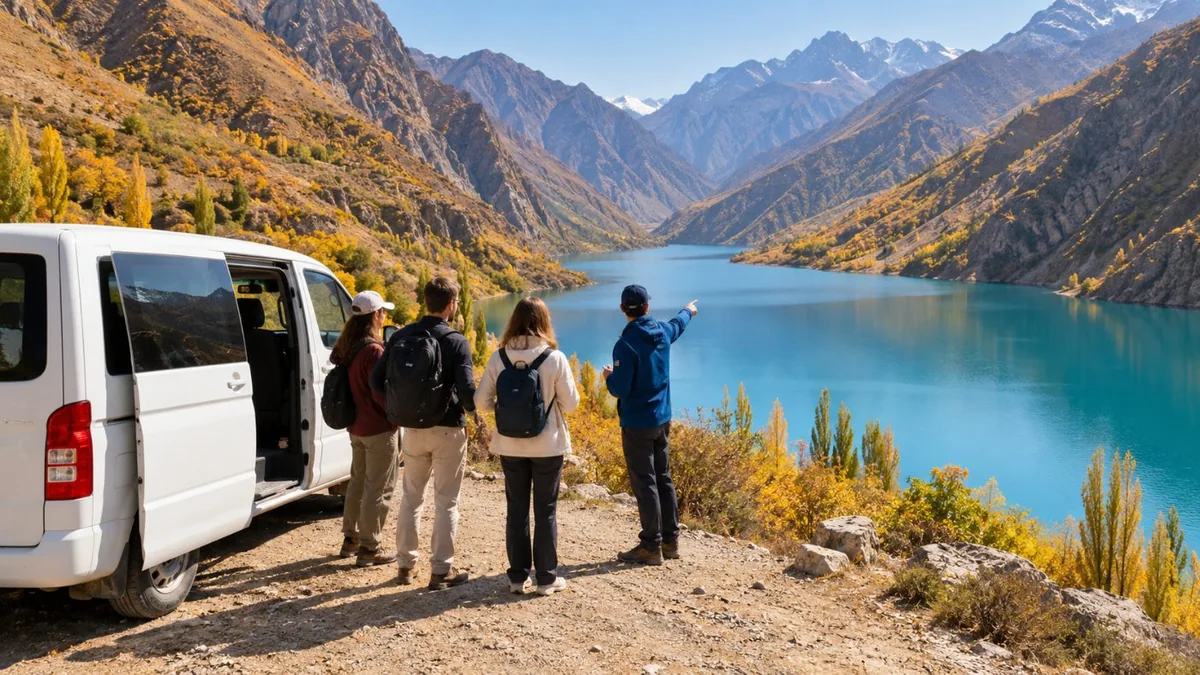
Most visitors arrive on a day trip from Samarkand, across the border in Uzbekistan, and see the lakes from a minibus window with stops at each one. That is the right way for most people. It is a drive with walks, not a hike, and this guide is honest about which bits you do on foot.
The quick answer
The Seven Lakes (Haft Kul) are seven natural dammed lakes in the Shing valley, about an hour and a half by road from Panjakent. A rough road links the first six, and the last stretch to Hazorchashma is a short walk or a bumpy track. You can't walk a loop around them: they sit in a line more than 14 km long. A day trip from Samarkand takes 11 to 12.5 hours, and the swim at the top lake is cold.
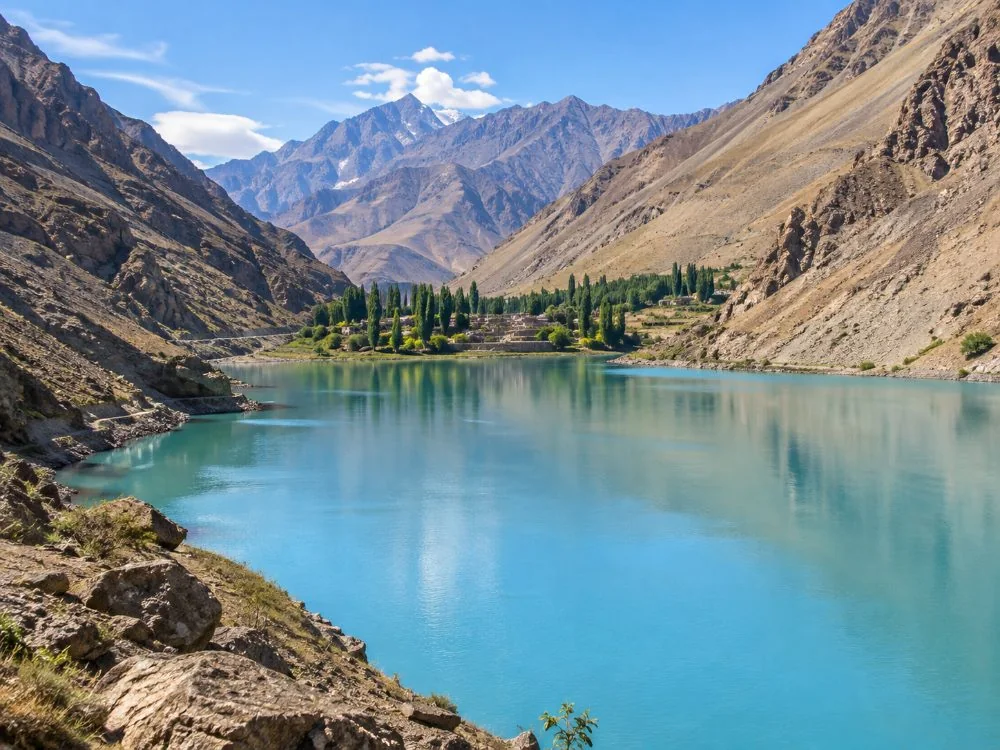
What are the Seven Lakes in Tajikistan?
A staircase of seven lakes in the Shing river valley, Panjakent District, at the western edge of the Fann Mountains. Landslides blocked the valley and the river filled in behind them.
Wikipedia describes them as natural dammed lakes; the Tajik travel site Eurasia Travel says they are of landslide origin. Their colours come from minerals in the water and the way light falls into the gorge, so the same lake can look turquoise at ten and grey-green at four. Small villages sit between them, the largest being Padrud, where people keep livestock and small gardens.
The valley belongs to the Fann Mountains, the rock-and-ice range whose top, Chimtarga, reaches 5,489 metres. You won't see the big peaks from the lakes road. For those, see Fann Mountains trekking.
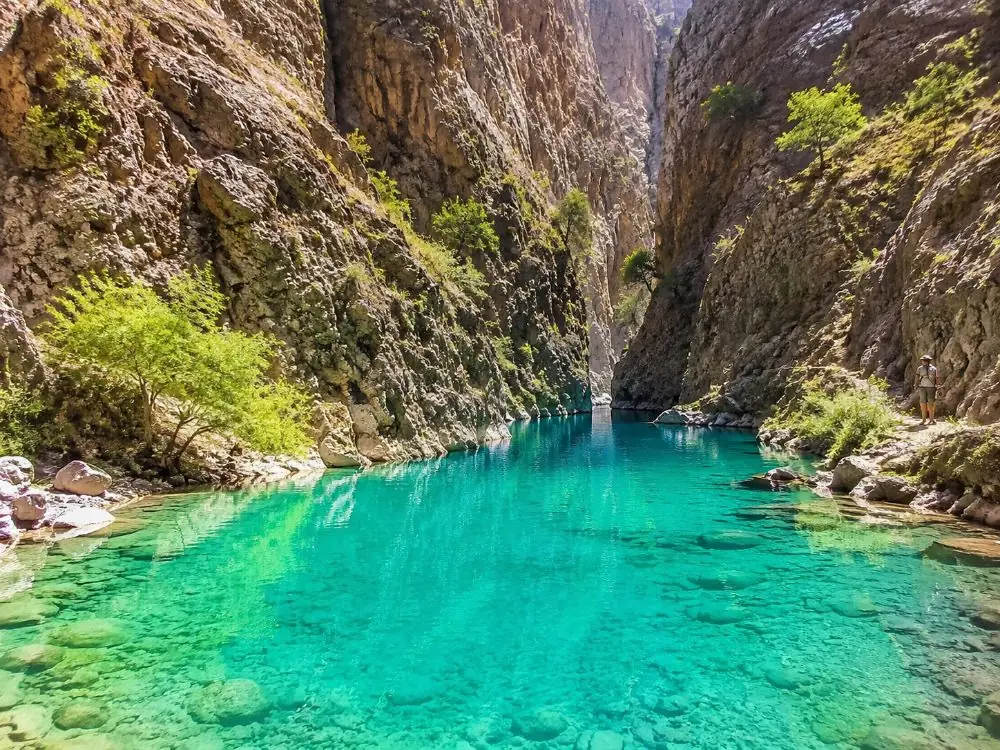
What are the seven lakes called, and how high is each one?
Mijgon, Soya, Hushyor, Nofin, Khurdak, Marguzor and Hazorchashma, from 1,598 metres to 2,400 metres.
Spellings change from map to map (Nezhigon for Mijgon, Gushor for Hushyor), so the table uses the most common one. Heights and meanings come from Wikipedia; sizes for Khurdak and Marguzor, and the meanings of Nofin and Marguzor, from Eurasia Travel.
| # | Lake | Altitude | The name means | Worth knowing |
|---|---|---|---|---|
| 1 | Mijgon (Nezhigon) | 1,598 m | Eyelashes | Small: 0.05 km², up to 20 m deep |
| 2 | Soya | 1,701 m | Shadow | Sits between cliffs that keep it in shade |
| 3 | Hushyor (Gushor) | 1,770 m | Vigilant | Named, says legend, for snakes on its shore |
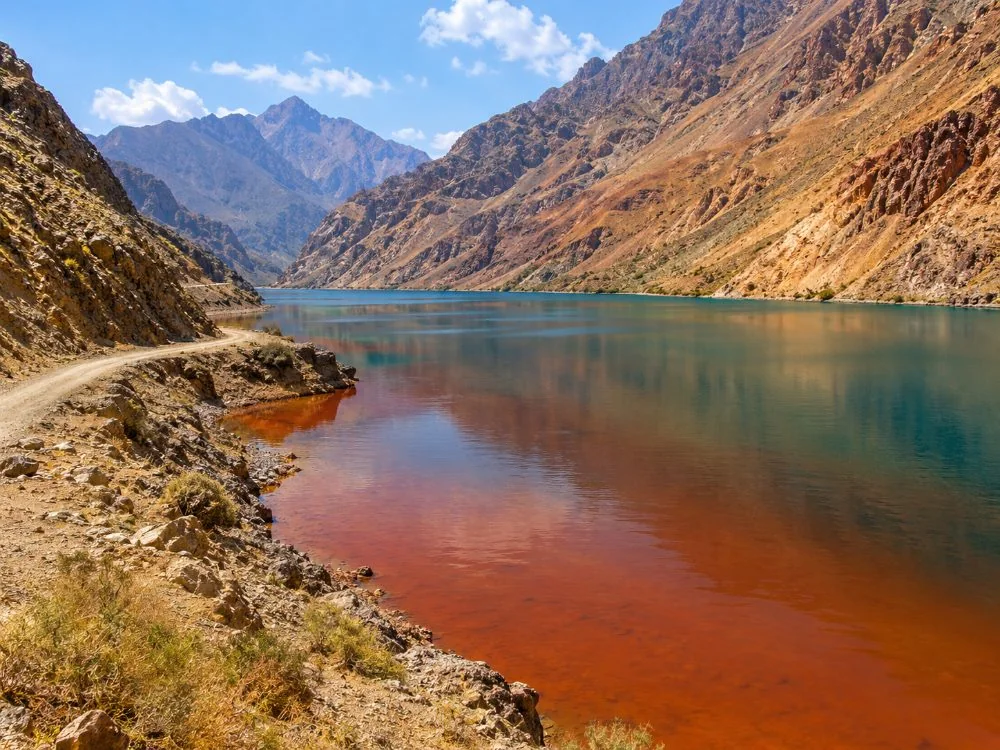
| 4 | Nofin | 1,820 m | Navel (umbilical cord) | About 2 km by 400 m, often reddish |
| 5 | Khurdak | 1,870 m | Small | The smallest, about 240 m long, near Padrud |
| 6 | Marguzor | 2,139 m | Meadow | The largest: about 4.5 km long, up to 45 m deep |
| 7 | Hazorchashma | 2,400 m | A thousand springs | The highest, set apart, fed by springs |
Some sources, including one of the day-trip listings, put the first lake at 1,640 metres. The difference is in the measuring, not the lake.
See all seven in one day from Samarkand, with lunch by Marguzor and help at both border posts.
Check dates for the Seven Lakes day tripWhere are the Seven Lakes, and how do you get there?
In western Tajikistan, south of Panjakent and close to the Uzbek border. The usual way in is a day trip from Samarkand; from Dushanbe it is a long drive.
From Panjakent a paved road runs about 20 km to the village of Tarror. After that, Eurasia Travel describes more than 30 km of winding, rocky road, narrow between Hushyor and Nofin and steep towards Hazorchashma. One travel writer timed about 1.5 hours by taxi from Panjakent to the first lake.
- From Samarkand: a tour minibus to the Jartepa border, both border posts on foot, then a Tajik vehicle up the valley. Every step is in the Samarkand day trip guide.
- From Dushanbe: a shared taxi to Panjakent takes about 5 hours, a December 2024 trip report says, then a driver for the valley. Most people from Dushanbe go to Iskanderkul instead.
- On your own from Panjakent: hire a driver for the day and agree the price and the waiting time first.
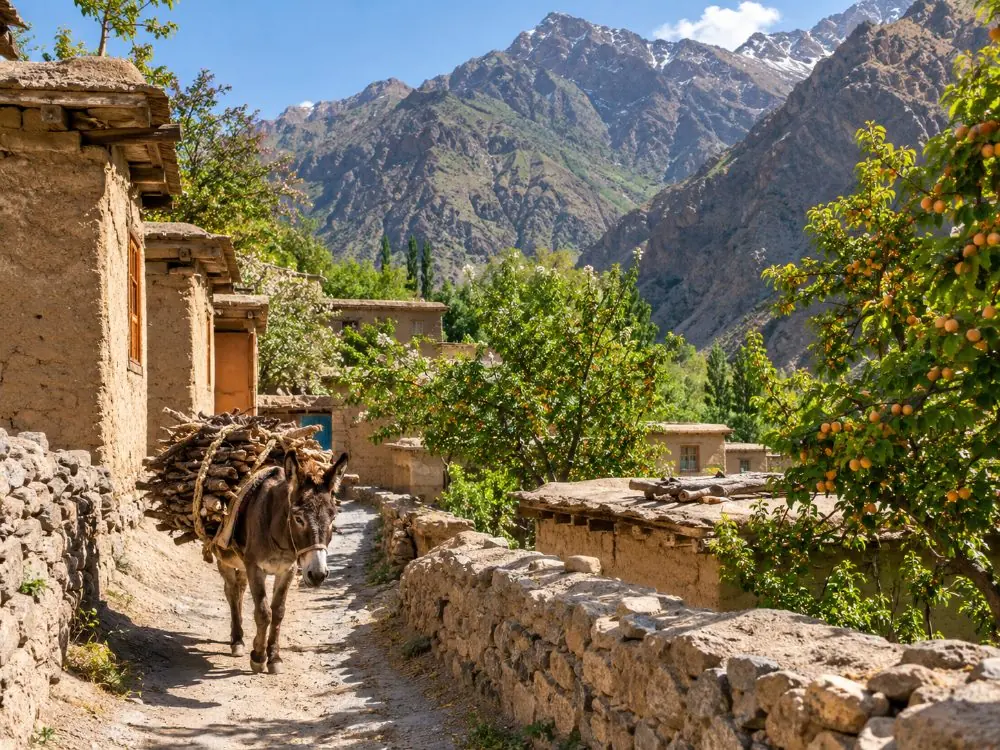
What is the 7 Lakes route, and can you walk around all seven?
No loop exists. The lakes lie one after another up a single valley, more than 14 km from the first to the last, and tours drive between them.
The route is the valley road itself: up from Mijgon, past the villages of Padrud and Marguzor, to the end of the drivable road beyond the sixth lake. Day trips stop at each lake for photos and a short walk. The last lake, Hazorchashma, is the exception. The Seven Lakes day trip lists a hike towards it and ends at a viewpoint above it. One writer walked about 20 minutes from the road past lake six to the bridge at lake seven; another, on a muddy March day, never got there and guessed two hours there and back.
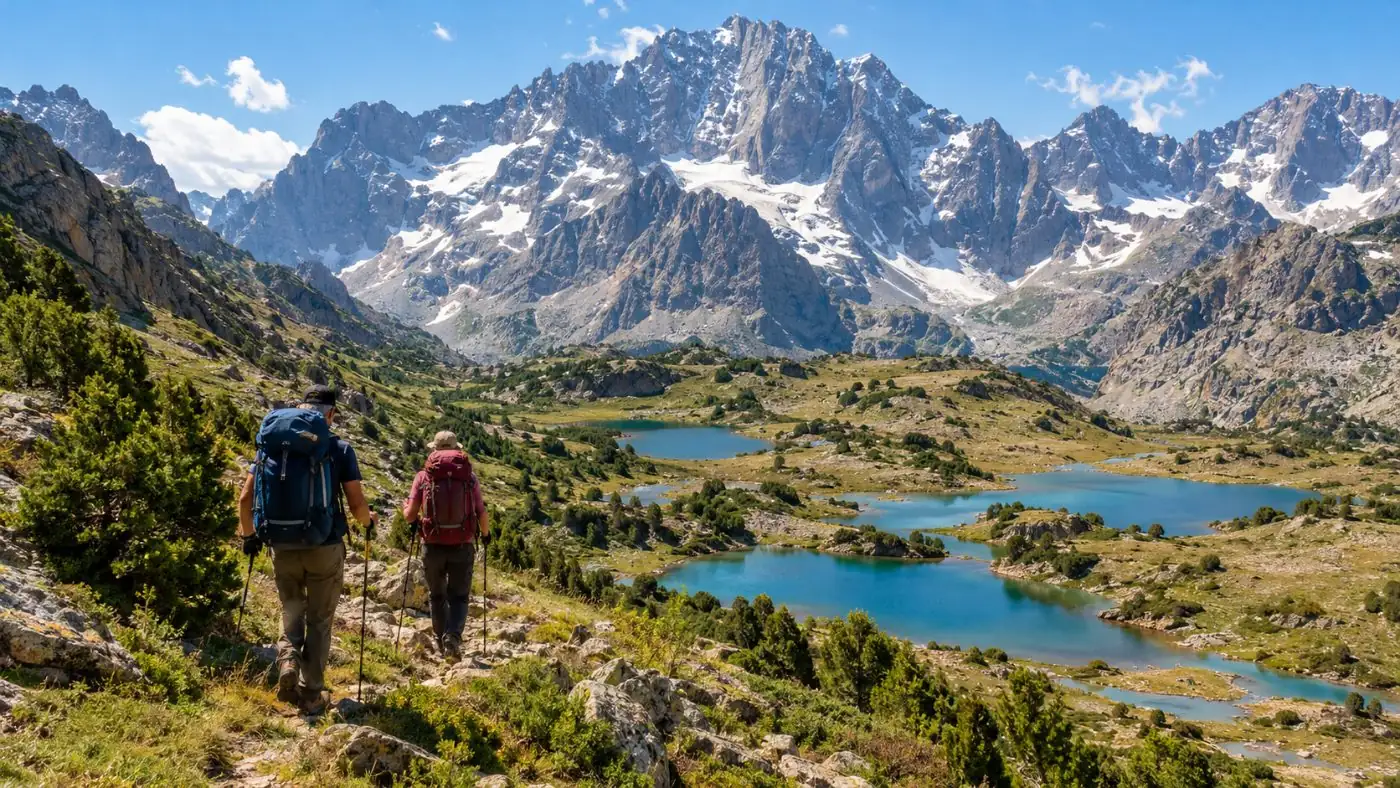
Real walking starts above Hazorchashma. Trails climb over the Tavasang Pass (3,300 m) into the Sarymat valley, and Bradt describes a five-day trek from Marguzor to Iskanderkul. That is a trek with a guide and a tent, not an add-on to a day trip.
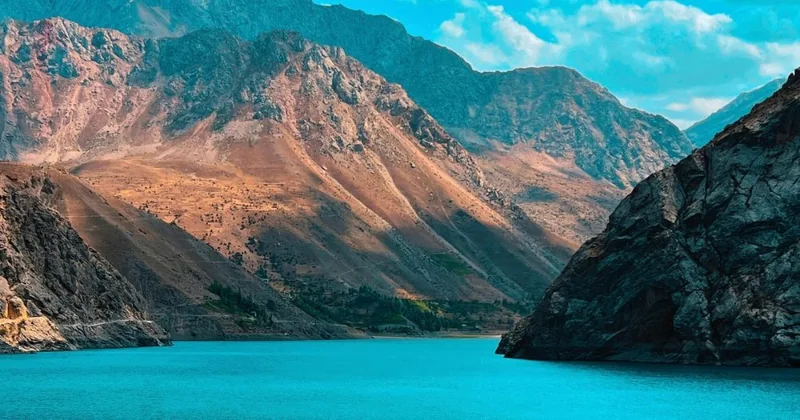
Seven lakes, the Panjakent bazaar and a walk near Hazorchashma, from 7 a.m. to about 7 p.m. from Samarkand.
Explore the Seven Lakes day trip Tour detailsHow long do you need for the Seven Lakes?
One long day from Samarkand: the listings give 11 to 12.5 hours door to door. Two days if you want time to walk.
Most of a day trip is road and border. The flagship listing leaves the Gur-e-Amir mausoleum at 7 a.m. and gets back around 7 p.m. One blogger counted 7 to 8 hours in a vehicle on a tour sold as 9 hours that ran to about 13. Time at the lakes is a few hours, spread over the stops.
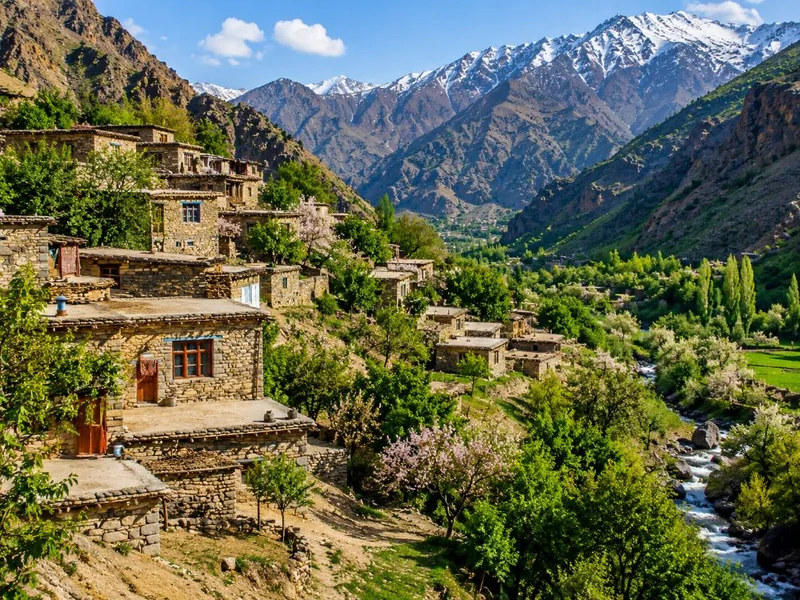
With more time, sleep in the valley. Bradt lists homestays at Shing, Nofin and Padrud, and informal ones along Marguzor. The two-day Voru and Seven Lakes tour sleeps in Panjakent instead and gives the lakes the whole of day two.
Can you swim in the Seven Lakes?
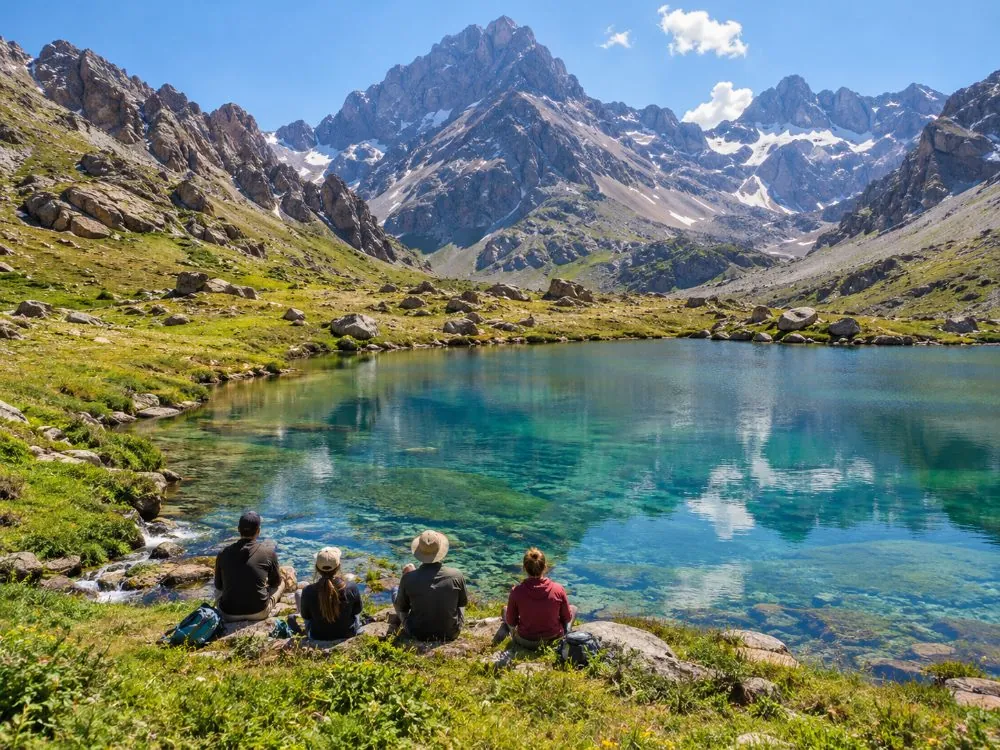
Yes, where the tour allows it, usually at Hazorchashma, the top lake. It is cold even in August.
The fully inclusive tour lists swimming in the final lake; the flagship listing calls the swim optional. A guest on the mountain adventure wrote in August 2026: "The 7th lake was phenomenal. You can swim there too, but it's really cold." A blogger who skipped the swim called the water freezing and the shore rocky. Another writer reckoned the first lake, much lower, was warm enough to swim in.
Pack swimwear, a towel and water shoes, since the shore is stones. Swim close in and get out the moment you start to shiver. Help is a long drive away.
A swim in the last lake is listed on the fully inclusive tour, along with lunch and water.
Check dates for the fully inclusive Seven Lakes tourWhich lake is the most beautiful, and what are the legends?
Most people pick Marguzor, the largest, or Hazorchashma at the top. The legends say the lakes were once seven sisters.
Marguzor is the one in the photographs: long, pale blue, with a village and poplars at its far end. Hazorchashma is smaller and wilder. Mijgon, the first, changes colour through the day, from dark blue in the morning to green and orange by evening, according to Eurasia Travel.
The stories guides tell are older than any map. In one, the youngest of a blacksmith's seven daughters refused to marry an old ruler and threw herself from the palace roof; Mijgon formed where she fell, and her sisters asked to become lakes beside her. In another, seven girls fleeing seven giants were turned into lakes and the giants into mountains. Locals say that when Nofin stays red too long, a goat or a chicken must be sacrificed, and that a wish made at Hazorchashma comes true.
Is this the Seven Lakes you were looking for?
If you searched for Seven Lakes and found Tajikistan, check the place. Several others share the name, in the US and in Europe.
- Seven Lakes, North Carolina is a residential community in Moore County, built around lakes and golf.
- The Seven Lakes Basin is a backpacking area off the High Divide in Olympic National Park, Washington. There you can walk a loop.
- The Seven Rila Lakes are in Bulgaria, a popular day hike from Sofia.
The Tajik lakes are the ones in a desert-coloured gorge with a dirt road, a border crossing and bread from a village oven. For the season and the weather, read the best time to visit.
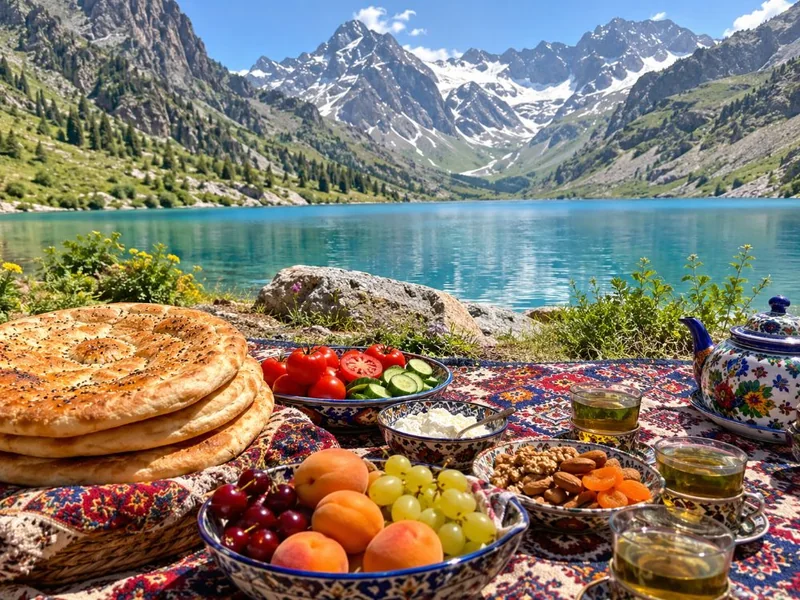
The Seven Lakes with a picnic, a swim and guides in six languages, including French, Italian and Korean.
Explore the Seven Lakes picnic day trip Tour detailsFrequently asked questions
How many lakes are there in the Seven Lakes of Tajikistan?
Seven: Mijgon, Soya, Hushyor, Nofin, Khurdak, Marguzor and Hazorchashma. Day trips stop at each one.
How high are the Seven Lakes?
From 1,598 metres at Mijgon to 2,400 metres at Hazorchashma. Marguzor, the largest, is at 2,139 metres.
How long is the 7 Lakes hike?
There is no single hike. On a day trip you walk at the stops and near the last lake. Trekking routes onward from Hazorchashma to Iskanderkul take about five days.
What is the largest lake in Tajikistan?
Karakul, in the Pamirs far to the east. In the Fann Mountains the largest is Iskanderkul; among the Seven Lakes it is Marguzor.
Ready to book
Choose your trip
Free cancellation up to 24 hours before on every option. Prices are from-prices in USD and move with the season.
Seven Lakes Day Trip from Samarkand with Lunch
- Minibus from Samarkand to the lakes and back
- English-speaking guide, help at both border posts
- Lunch at Lake Marguzor (vegetarian on request)
Seven Lakes of the Fann Mountains Day Trip with Picnic
Guides in French, Italian, Russian, Persian and Korean too
2-Day Fann Mountains Tour: Voru Village and Seven Lakes
A night in Panjakent, so the lakes get a whole morning